Sunday, 29 November 2009

BORNEO 6TH NOV -11TH NOV.

Most people come to Borneo for a particular reason and that is to see the the giant Orangutan and the long nosed proboscis monkey which I believe are unique to this island.In Borneo there are tribes who use to live in their traditional way in the long house, which are basically bamboo houses interconnected with one another. However these days not many tribes people live in the traditional way and the visits to their villages are mainly for the benefit for the tourists and of course it is source of income for the tribes people so that they can buy motorbikes. Some of the tribes only have 50-100 individuals and are threatened with extension.
Kuching , the capital city is totally different to all the other S E Asia cities. The city is well spread out and unlike the other Asian cities it is very quite and not many people on the streets. The shopping malls are huge but there are no people in them. Also very few tourists compared to the other cities we have been to.
We went out into the thick dense jungle to see the Orangutan but did not have much luck in finding them in the wild so had to go the sanctuary where you are guaranteed to see them. They are Hugh animals and moving from tree to tree effortlessly. A very impressive sight.
It is the rainy season here so the trekking in the jungle was very difficult. The humidity was intense and unbearable, made worst by all sorts of insects bites and leches clinging on to you. We were forewarned by people who had already been there before so we were reasonably prepared for this. Leches must not be pulled from your skin if you get one, the trick is to burn them with a cigarette end and they will drop off. I had seen this being done in the movies and we were also told by the guide who obviously new all about the different insects, bird life and the various different plant and animal life in the jungle.
The track through the jungle was meant to be for a whole day but gave up after four hours as Rekha and the insects do not go together. On your won trekking in such places is frightening with all kinds of animal noises and the fear of snakes lurking in the trees.
The island historically has extensive rain forest full of bird species and all kind of different animals. The rain forest here is the only natural habitat of the Borneo Orangutan and the guide told us that in the rain forest , on a regular basis they discover new plants and animals that has never seen before.


a walk thorugh the jubgle leads to a beach
seaside at the end of the trek

borneo jungle


trekking , not happy at all


feeding time for orangutan


daddy of the family


assembly house Kuching


water front kuching


Friday, 27 November 2009

Vietnam

THE MEKONG RIVER
Mekong delta is a net work of canals , 4 hours form Saigon and is the biggest rice growing region in Asia. The net work of these canals is a little like Kerala backwaters.Houses are all along the banks or in the house boats and the daily activities like washing cleaning etc all takes place on the river. The water ways are like high street. All trading activities is done by boat and on boats. Hundreds of tourists boats on the river simply adds to the traffic and collisions are frequent. Spending hours travelling in the boats and watching the same mundane activities can be very boring in 90 degree heat.
During such boat trips you meet different people from different countries, who have either been to the places you are travelling to or are going to places you have just been. Exchanging of information and maps etc becomes very useful, specially about means of transport and hotels and a price of a bottle of water. A bottle of water can cost you form 20p to 1.20. but people very soon get wise and would not pay any more than necessary.
The Mekong in the morning

Sun set on The Mekong

Exploring the small canals of the Mekong


On the Mekong

Back from a shopping trip on the river boat.

River is like a highway

Floating market boats.

A river Cruise on the Mekong
SAIGON 1-4TH NOV.
Saigon is even more busy than Hanoi and definitely has more motorbikes on the road. When crossing the road the trick is to ignore them and simply walk. It is up to them to avoid you and they will whizz past , in front or at the back of you. After a while one gets used to it. There was a group of Australian couples who would, from eleven o'clock , sit by the intersection of the road , drink beer all day and just watch the fast flowing traffic.
Women in Saigon are very enterprising. Girls as old as ten are on the road selling, either books ,post cards, maps, fruits and various items. They are allowed to come inside the restaurants and bars right up to the table and offer you the goods. Their favourite word is "buy me" when they actually mean buy from me. However they are always smiling and flirting with you and using gentle persuasion . One can also exchange books old for new ones, which is always good, although the bargaining can be tricky.
The local bars in Saigon are about ten feet square. The table and chairs are all laid out on the foot path and they are the one like you find in a nursery school in England. They are meant for locals who are small but are all occupied by big fat Europeans and Americans. One has to buy the beer in a big plastic bottle poured from a big pressurized tank. The beer is quite strong. After a while you can see some people falling off the chairs, a sign that you have had enough to drink. It is very funny when women with big bums laughing loudly one minute and then the next minute they are off the chair on to the footpath. The chairs are very uncomfortable for tall people like me also but when it comes to beer I know my limit, and no I did not fall off the chair.
The Saigon bars are no longer seedy as they use to be 30 years ago but very simple and good fun to sit out and converse with local people who want to improve their English.

A street in Saigon

A customer in the Post office

Inside the Post office

Post office built by the French

Notre dame in Saigon
NA TRANG 30TH/31ST OCT.
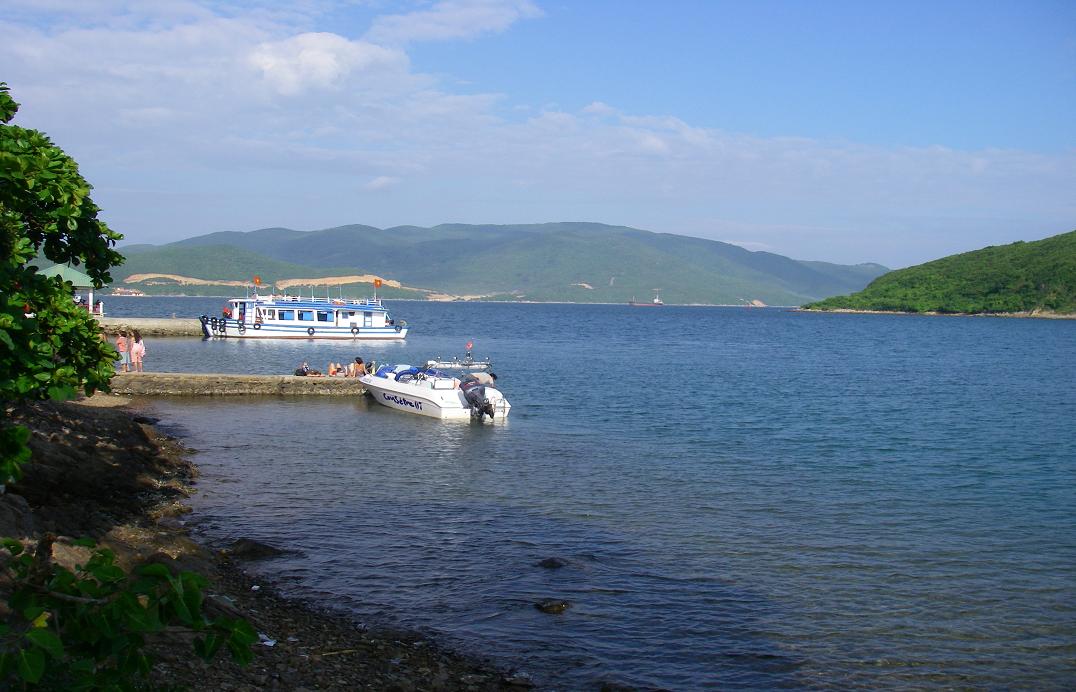
Na Trang on the ease cost of Vietnam is fast becoming like any other beach resort except the beach is set in a lovely bay and is very picturesque with rolling hills in the background.
Finally we had a day when no trips were planned and spent the whole day on the beach only being woken up from time to time by fruit sellers selling irresistible tropical fruits and lovely ladies wanting to give you a massage. This I found very tempting and decided to go for a four hand massage. This is two lovely ladies messaging your body at the same time for a full hour. Made me feel very good but only for a little while. I think they want you too keep on coming for this massage everyday.
Visiting the various small island off the cost was nothing exciting but being on the boat with mainly Vietnamese crowd was great fun as they involve you in all the activities like singing and dancing that goes on the boat.
Na Trang is a favourite honeymoon resort for the young Vietnamese so there were many young people on this resort. Some of them thought that we were also on our honeymoon here.

Same as below slighty different view

A view of Natrang pier

Local entertainment on a boat trip

Trekking is fun but the humidity is stiffling.

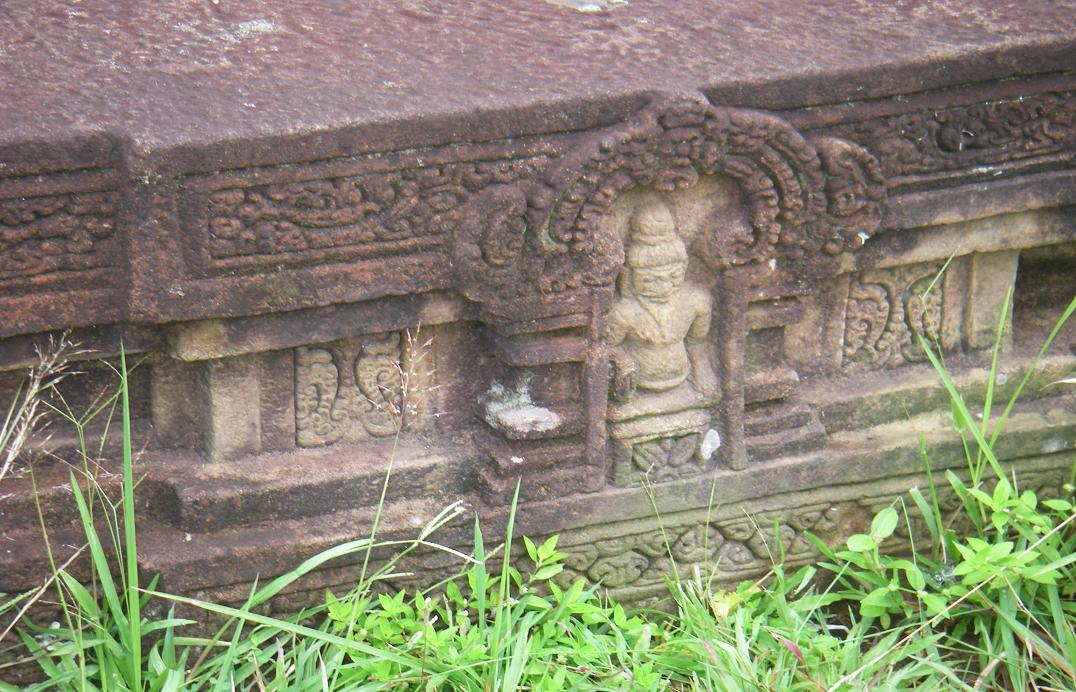
Ancient carvings on the wall in Natrang

Friday, 30 October 2009

VIET NAM - HOI AN.

Hoi An, further south is a fairly small town on the coast, it is well known for ancient Shiva temples built around 200AD. However much of this site has been destroyed during the Viet Nam war. There are huge bomb craters not yet filled for people to see and are used as tourists sites.
Lots of tailor shops in the town that can make ladies and gents clothes in a day at a fraction of the price. No good to us as we are not on a shopping holiday.
Any where in Viet Nam, a boat trip down the river is interesting. Life depends on the activities going on in the river like fishing in traditional canoes, house boats, irrigation for rice fields and washing. I am always fascinated by the way the river is used in these parts of the world.
Quite a few Americans in Hue and Hoi An . Some here to repent, some visiting the graves of friends and family and some visiting and flashing dollars thinking it would help. We spent two days here, again in a lovely hotel.

My `Son ruins.Old Shiva temple site.

a tourist boat
A pagoda -7 stories
No idea

VIET NAM -HUE

Hue is in the middle of the country and was the ancient capital until 1945. The emperor made this as the capital simply because it was right in the middle and made it easy for him to govern.
Hue has many interesting monuments the most important being The Citadel, the forbidden city and many tombs of the emperors. The tombs interestingly were made whilst the emperor`s were alive and oversaw the construction.
During the Viet Nam war the Viet Cong used the cultural sites as a hiding place thinking the Americans will not bomb such an important site, however the Americans did bomb it and there was a huge amount of house to house fighting which destroyed many important sites.
Hue is quite a relaxing city without the hustle and bustle of Hanoi. Spent two days here taking in the various sites. Again a welcome in all the hotels we stayed has been exceptionally good. Also now we are getting temple and pagoda fatigue. In the last few days we have seen so many of them and there are few more to see in the next few days.
gateway to one of the tombs
emperors rest house


tomb of the 18th century emperor

Colourful burning sticks for sale

Tuesday, 27 October 2009

VIET NAM SAPA TREKKING.

SAPA
330Km form Hanoi and by overnight sleeper train will bring you to Sapa, an incredibly picturesque village that lies on the Hoang Lien Son mountain range near the Chinese border in the north. Here one can see many hill tribe people , the three main tribes in the hills are the H`mong,Dzao and Tai. Their villages and the life style and rice terraces, lush vegetation and the Fansipan, the highest mountain peak in Vietnam make this area a very interesting visiting place. We undertook two trekking expeditions, one of 8km up and down the mountain range and one of 12km going down the valley visiting villages along the way and coming back by bus.
The treks start early in the morning and a group of tribes women will be waiting outside the hotel and will follow you all along the trek and talk to you and will try and be friends with you ,of course in the hope of selling you colourful clothing and souvenirs.
The local tribes have quickly adopted to tourists and most of the women speak English, French and a little bit of some other European languages. Whilst the women are chasing the tourists the men are looking after the house and children and also doing the cooking. In some of the remote villages tourism has not had a good effect, however the villages are not complaining as they have become relatively wealthy. The H`mong tribes wear more black whilst the Dzao wear more red and less black colour clothing. The Dzao women,when they get married shave off their forehead and their eyebrows so that other men would not look at them (except tourists).
Our treks took us to stunning scenery with vertical rice terraces, huge water falls and mountain peaks that had permanent mists hovering above them. The weather here is cool so walking is not that tiring and the treks are well marked. Roaming and walking around this region was really very pleasant and given more time there is a lot of trekking to be done including the climb to Fansipan.
During our Sapa trip we met a lovely Canadian couple from Vancouver by the name of Salim and Shazan who were on their honeymoon. What a coincident, they also know our friends Azim and Ruby in Vancouver. They did the same treks as us and therefore the trip became even more interesting as we discussed and talked about a few things. Ruby will be able to recognise the couple from the photos I have posted.
stepped rice fields.
Dzao woman and me in conversation

a class room in the tribe village.

Dzao tribe women

taking a rest on the trekking trail.

Dzao tribe women

tribe woman acting as a guide.

stepped rice fields

H`mong women following on the trek

Grinding machine-hand powered.

H`mong tribe women waiting at the hotel

falls are a popular photo site

By another falls in the area

By the falls in Sapa